
When people think of injection molding machines, what usually comes to mind are massive pieces of factory equipment: machines that occupy several square meters of floor space, are tethered by thick three-phase industrial power cables, require checks of hydraulic fluid and cooling water before startup, and must be operated under the watchful eye of a seasoned technician. Such heavy-duty machinery is destined to remain on the factory floor—let alone in a laboratory or office—making it impossible to simply run off a quick test specimen to evaluate performance.
However, the advent of desktop micro-injection molding machines has completely transformed this situation.

It is no longer a piece of production equipment restricted to factory floors; instead, it is a precision instrument compact enough to fit into the corner of a laboratory or even sit right on an R&D engineer’s desk. The key breakthrough lies in its power requirements: it runs on standard 220V household electricity—simply plug it into a wall outlet to start—eliminating the need for specialized industrial three-phase power installations.
This capability for “on-demand, anywhere” injection molding represents a revolutionary shift for product development and materials testing.
In the past, the journey from blueprints to physical prototypes involved lengthy scheduling delays and exorbitant prototyping costs, with a single iteration cycle taking up to two weeks. Now, with a desktop injection molding machine, multiple design iterations can be completed in a single day: adjust the formula or structure in the morning, mold standard test specimens by midday, conduct performance testing in the afternoon, tweak parameters that evening based on findings, and produce a new version of the sample the very next day. This pace of rapid iteration is simply unimaginable under the traditional model of outsourcing prototype production.
Moreover, compared to traditional large-scale injection molding machines, desktop models have a significantly lower barrier to operation.
Featuring a full-touchscreen control interface, the system displays key parameters—such as temperature, pressure, speed, and holding time—at a glance, allowing for intuitive and precise adjustments. Technicians with prior injection molding experience can get up and running with almost no additional training; even R&D personnel with no background in the field can independently produce prototypes within a day or two after brief instruction.

Maintenance is equally hassle-free: there are no complex hydraulic systems or requirements for periodic hydraulic fluid changes; routine cleaning of the barrel and mold is all that is needed to ensure stable operation.
Of course, desktop micro-injection molding machines do have their limitations.
With limited shot capacity and clamping force, they are unsuitable for the mass production of large parts, and the mold size they can accommodate is restricted—oversized molds simply cannot be installed. However, for their core applications—such as product R&D prototyping, material performance testing, small-batch precision part production, and educational experiments—they offer advantages that traditional, large-scale machines cannot match.
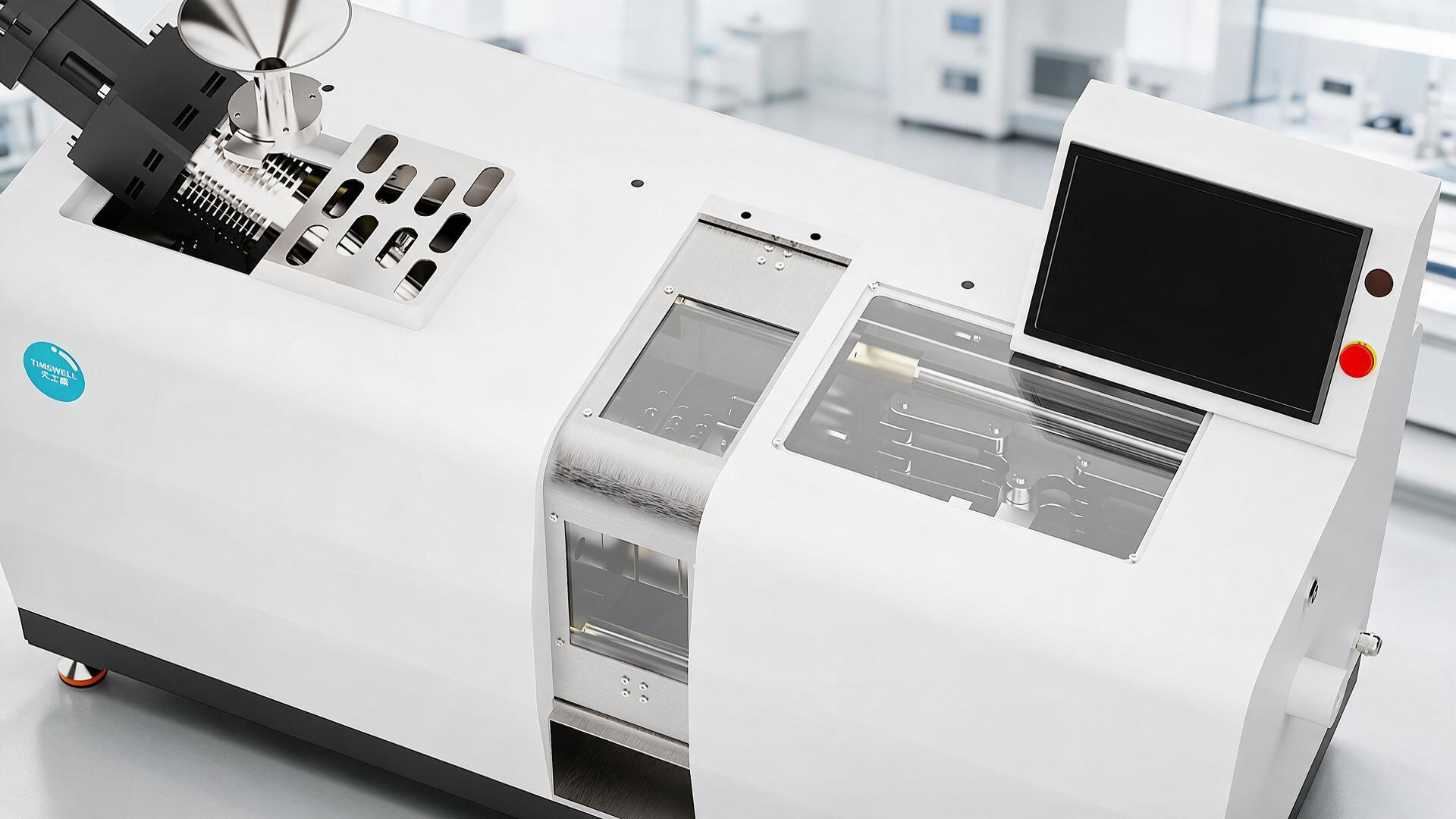
Compact size, a small footprint, 220V power compatibility, ease of operation, and simple maintenance—these combined features have truly brought injection molding into the laboratory and office for the first time, serving as a highly efficient tool right at the fingertips of R&D professionals.
If you are frustrated by long prototyping cycles and high costs, wish to accelerate your R&D iteration, or want to make material testing in the lab more flexible and efficient, it is worth taking a look at desktop micro-injection molding machines.
While they may not replace large-scale factory production equipment, they will certainly become one of the most efficient assets in your R&D workflow.