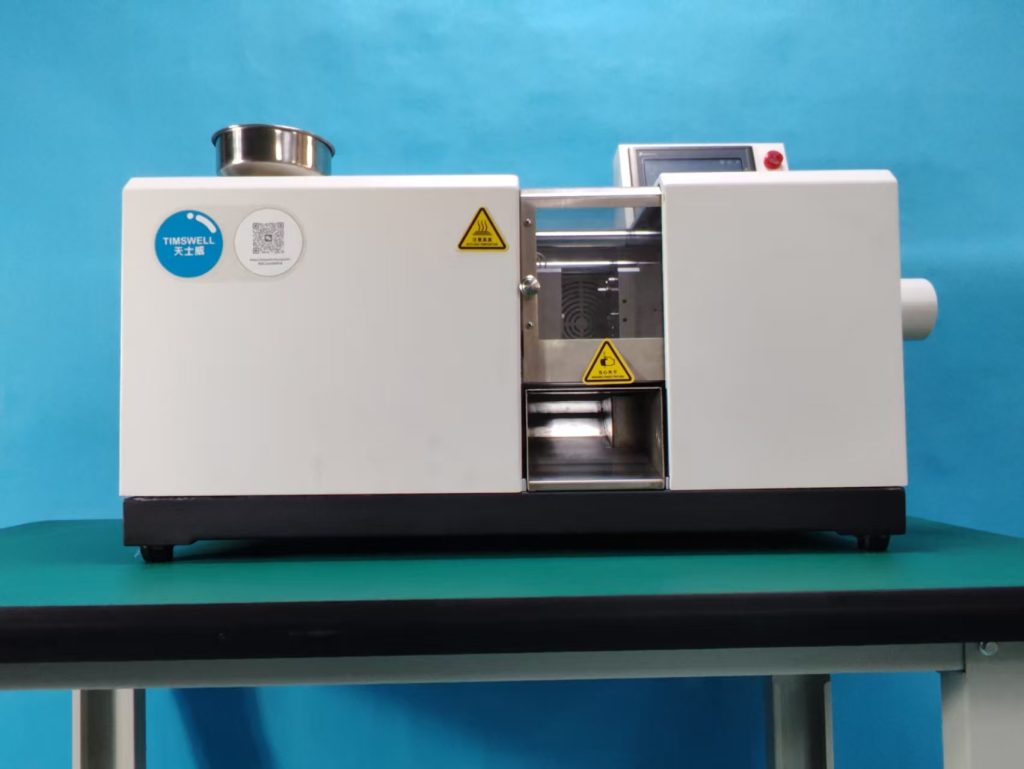
Timswell laboratory injection molding machine provides precise, efficient, and flexible equipment for material research, product development, and process validation. It is widely used for testing new material formulations, producing small batches, and supporting research and teaching activities.
Main Advantages
- Compact size: These machines occupy minimal space, making them ideal for laboratory and R&D settings.
- Small shot volume: They use less material per cycle, which is suitable for testing expensive or novel materials.
- High precision: Laboratory injection molding machines produce test specimens and components with tight tolerances, meeting the requirements of advanced research.
- Easy mold changeover: Streamlined mold swaps and quick adjustments speed up product iteration and process optimization.
- Simple operation: The workflow is user-friendly, supporting efficient documentation of experimental results and convenient operation for research teams.
Key Application Scenarios
- New polymer and functional material development, small-lot test piece fabrication, and physical property evaluation.
- Prototyping and rapid verification of product design and structure in innovation-focused enterprise R&D departments.
- Educational and training use in universities and research labs, enabling students and researchers to master injection molding technology.
Additional Value
- Reduced experimental and development costs by eliminating the waste and high investment of full-scale production.
- Accelerated R&D cycles, allowing faster turnaround from concept to physical testing.
- Supports multi-material and complex designs, facilitating advanced research and cross-disciplinary innovation.
Timswell laboratory injection molding machines deliver flexibility, precision, and cost-effectiveness—powerful support for product innovation, materials research, and academic teaching in fields ranging from medical to automotive and consumer goods.